FD Online: What to Review Before Opening a Fixed Deposit Digitally
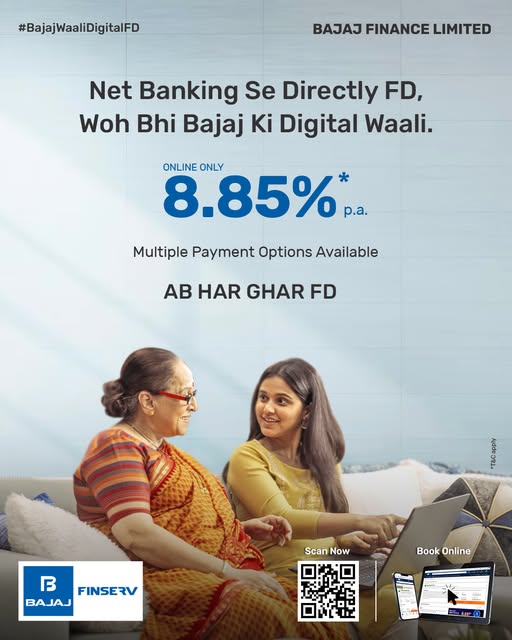
Opening an FD online can make fixed-deposit investing more convenient because users may be able to compare tenure options, review applicable rates and complete the process digitally. The ease of access is useful, but the decision should still begin with the financial goal rather than the convenience of opening the deposit.
Someone exploring borrowing through an instant loan app should also remember that borrowing and saving serve different purposes. An FD is generally used to set aside money for a defined period, while a loan creates a future repayment obligation. Keeping these decisions separate can make overall financial planning clearer.
Before opening an FD online, it is useful to review the tenure, maturity value, liquidity needs and withdrawal conditions carefully.
Start With the Reason for Opening the FD
The first question should be simple: what is this money for?
An FD may be used for a planned expense, short-term savings goal or to keep part of available funds in a fixed-tenure product.
The answer helps determine how long the money can realistically remain deposited.
If the funds may be needed within a year, selecting a significantly longer tenure may reduce flexibility. If the goal is further away, a longer option may be considered depending on the available product terms.
Online Convenience Should Not Drive the Tenure
A digital interface may make it easy to choose from several tenure options, but the most attractive-looking choice is not always the most suitable.
Users should match the deposit period with the expected date when the money may be required.
A practical review should consider:
- Expected financial goal date
- Amount being deposited
- Emergency savings available separately
- Need for periodic liquidity
- Maturity value
- Premature withdrawal conditions
The goal should determine the tenure, not the other way around.
Compare Rates for Similar Deposit Periods
Interest rates can vary across tenure ranges.
This means users should compare deposits with similar maturity periods rather than simply choosing whichever rate appears highest.
A higher rate on a much longer tenure may not be useful if the money is required earlier.
It is also important to understand whether the displayed rate applies to the exact amount and tenure being selected.
The final deposit details should be reviewed before confirmation.
Check the Expected Maturity Value
The maturity value can make the FD easier to understand in practical terms.
Instead of focusing only on the percentage rate, users can look at how much the deposit may be worth at the end of the chosen tenure.
This helps connect the FD to the actual savings goal.
If the expected maturity amount does not meet the target, the user may need to reconsider the deposit amount, savings period or overall plan.
Keep Emergency Money Outside the Deposit
One common mistake is placing too much available cash into fixed deposits.
While an FD can encourage disciplined saving, emergencies may require faster access to money.
Medical costs, repairs or temporary income disruptions can happen unexpectedly.
Keeping a separate emergency reserve can reduce the need to close the deposit early or take on new borrowing simply because cash is not immediately available.
Premature Withdrawal Rules Matter
Even when the plan is to keep the FD until maturity, circumstances can change.
Users should review what happens if the deposit needs to be closed earlier.
Depending on the product, premature withdrawal may involve conditions such as a reduced interest rate or applicable penalty.
Understanding this in advance helps users decide how much money they can comfortably lock away.
Liquidity should be treated as part of the return decision, not as an afterthought.
Review Interest Payout Options
Some FD products may offer different ways of receiving interest, depending on the institution and terms.
A cumulative option may allow interest to remain within the deposit until maturity, while other options may provide periodic payouts.
The suitable choice depends on what the user wants from the deposit.
Someone saving toward a future lump sum may have a different preference from someone looking for periodic cash flow.
The payout structure should therefore match the financial objective.
Automatic Renewal Should Be Reviewed Carefully
Some online FD journeys may include an automatic renewal option.
This can be useful for users who want the deposit to continue after maturity, but it should not be treated as a permanent default.
Financial circumstances can change before the maturity date.
At that point, the money may be needed for the original goal, or a different tenure may be more suitable.
Reviewing the deposit before renewal keeps the decision aligned with current needs.
Check the Institution Behind the FD
The digital process may feel simple, but users should still know which bank or financial institution is accepting the deposit.
The product should be evaluated using official information.
Users should review the applicable tenure, rate, withdrawal rules and other terms directly through the relevant official channel.
The quality of the digital interface should not replace understanding the institution and the deposit itself.
Do Not Choose Only on the Highest Rate
A higher rate can be attractive, but it should be considered alongside other factors.
A useful comparison can include:
- Deposit tenure
- Maturity value
- Withdrawal flexibility
- Interest payout structure
- Minimum deposit requirement
- Renewal terms
- Institution details
The best option for one saver may not be the best for another.
The right FD should fit the user’s timeline and liquidity needs.
Splitting Deposits Can Improve Flexibility
Instead of putting the entire amount into one fixed deposit, some users may prefer to divide the money across different maturity dates.
This can create more flexibility because not all funds remain locked until the same date.
For example, separate deposits can be aligned with different expected expenses.
This approach can also reduce the need to break a large FD if only part of the money is required earlier.
The structure should still reflect the user’s goals and available funds.
Digital Records Can Make Tracking Easier
Opening an FD online can make documentation easier to organise.
Users may be able to access deposit details, maturity information and related records digitally.
This can help with periodic review.
Important details worth keeping accessible include:
- Deposit amount
- Start date
- Maturity date
- Applicable rate
- Nominee information, where relevant
- Maturity instructions
Clear records reduce the chance of losing track of the deposit over time.
Review Nomination Details Where Available
Nomination can be an important part of financial account management.
Where the product allows it, users should review whether nomination details are correctly recorded.
This is especially important for longer-tenure deposits.
The details should remain accurate and updated if personal circumstances change.
Digital access can make review easier, but the information still needs to be checked carefully.
Understand Tax Implications
Interest earned from fixed deposits can have tax implications depending on the user’s situation and applicable rules.
The effective return after tax may therefore differ from the headline rate.
Users should consider relevant tax treatment when comparing deposit options.
For individual tax decisions, official guidance or professional advice may be appropriate.
The important point is to evaluate the return realistically rather than only before tax.
Avoid Using an FD as the Entire Savings Strategy
A fixed deposit can play a role in a savings plan, but different goals may need different levels of liquidity and time horizons.
Short-term emergency money may need to remain easily accessible. Other goals may justify a fixed tenure.
This means users should avoid putting all available savings into one product simply because the online process is easy.
A balanced approach can provide both discipline and flexibility.
Review the Deposit Before Maturity
The FD should not be forgotten after it is opened.
As the maturity date approaches, users can review whether the original goal is still relevant.
They may decide to withdraw the money, renew the deposit or use the funds for the planned expense.
Reviewing in advance can prevent automatic decisions that no longer match the financial situation.
Maturity should be treated as a decision point, not just a system event.
Conclusion
Opening an FD online can make fixed-deposit management more convenient, but the decision should still be based on tenure, maturity value, liquidity needs and withdrawal conditions. Users should also keep emergency funds accessible and review renewal instructions before the deposit reaches maturity.
Savings and borrowing should remain separate financial decisions. If a different need leads someone to explore Loans, that choice should be evaluated independently on repayment capacity, cost and purpose rather than being influenced only by the existence of an FD.